

Protect Trans Kids: A Field Guide to What’s Happening
Gender-affirming care, explained: what’s being threatened, why, and the lives on the line

This post takes ~10-15 minutes to skim and ~20-40 minutes to read or listen (depending on the speed you select/your reading pace)
If you only have 5 minutes, consider reading the Field Notes below.
If this helps, please share in whatever way feels good to you, and if you want updates as things change, you can subscribe so you don’t miss revisions 🏳️⚧️
Hope everyone is taking care of themselves and I’m sending a big crip/trans hug (or high five) through the ether 💟
Field Notes (for those with limited spoons or time)
Skim this now, and return to read/listen whenever you have the capacity 💌
The biggest threat to trans kids right now is a coordinated push to restrict or eliminate access to gender-affirming care in the US through federal and state-level legislation that relies on unfounded evidence and claims surrounding trans folks and care.
This isn’t a random wave of legislation; it’s tied to an organized disinformation campaign and movement organizing for over 30 years. This “anti-gender” movement frames being trans as an “ideology” they can disagree with and must eliminate, using kids as their emotional leverage point.
Trans youth are at higher risk for depression, anxiety, and suicidality. Not because they’re trans, but because occupying this identity (and other intersecting marginalized identities) within our society leads to increased stress, discrimination, stigma, and prejudice.
Gender affirming care is expansive; it includes social support, mental health care, and medical care. Even before state-wide bans, access to gender affirming medical care has been limited, usually to upper-middle-class, white, well-educated families with the time and money to seek out and access such care.
The evidence is clear. When trans kids are supported and can access appropriate care, their mental and physical health outcomes improve; when care is denied, direct harm is caused. Access needs to increase, not be restricted.
Content Warning: Mental Illness, Self Harm, Transphobic Language
Why I Wrote This
I’m a context person, a why person, if you will. When I learn about legislative efforts directly attacking trans and gender nonconforming folks, when I see the “Kamala is for they/them” political ads while I’m simply trying to watch a football game, when I discover my own mom is cutting out articles in the New York Post claiming myself and my community are “threats” and “predators”, I not only experience the harm of that, but this itch to know why this is happening. I can’t help but think that it can’t just be hatred, that there must be something else at play here.
So I started researching, unconsciously at first, and then more fervently combing through medical journals, legal analyses, interviews, and books offering insight on the many questions that were swirling around my brain. Questions like:
What’s the current state of legislation against trans folks in the US?
Who is behind these attacks? Why do they care so much?
Why are trans kids at increased risk for depression, anxiety, and suicidality?
Can gender affirming care help? What’s at stake when access is lost?
It’s unfortunate that when a group’s rights are under attack, they often take on the work of educating others while simultaneously facing the many difficulties that come with those kinds of threats. But I also believe it’s better to hear about these experiences from trans folks themselves, rather than some random cis reporter at The New York Times or any other massive newsroom.
So many articles or explainers I’ve read as part of this research fall in the category of something just happened, here’s what it means in a legal, medical, or social context. These can be super helpful, but my brain is always wanting something that brings together all of those contexts combined with the lived experiences of trans folks today.
That’s what I try to do here.
Gender, gender-affirming care, and the types of discourse around trans people within politics, media, and society at-large is nuanced and confusing, setting aside the fact that it’s become a wedge issue across the globe. In trying to better understand all of this, it became immediately clear that one of the most urgent threats to trans folks today is the effort to eliminate access to gender affirming care for trans and gender nonconforming (TGNC) kids within the US.
I remember what it’s like to be a trans kid. It’s not easy and I can’t imagine how difficult it must feel today. I wish the many legislators, politicians, lawyers, journalists, and people forming an opinion about the validity of our existence knew more about that lived experience, rather than talking about us as some contagious threat, all-powerful force, or abstract group.
From these feelings and this research emerged two pieces of writing. In the one you’re reading now, I unravel the threats trans youth are facing today by mapping the current wave of legislation, the disinformation campaign behind it, and the very real harm it causes. I also lay out why trans kids are at higher risk, what gender affirming care is (and isn’t), and how access to it can be lifesaving. My goal is to show how these laws are built on unfounded science, tied to a broader effort to frame trans people as a threat, and are poised to create immense harm for a population already at disproportionate risk.
Next week (or the week after, I’m working on crip time), I’ll explore the overlap between trans youth and eating disorders. I’ll dig into the nuance of that connection using research and my own experience, and show why losing access to gender-affirming care can have unique and catastrophic consequences for this group.
Current Legislative Efforts Against Gender Affirming Care in the US
HHS/CMS Proposed Rule
On December 19th, the Department of Health and Human Services (HHS) under the leadership of Robert F Kennedy Jr, proposed a rule that attempts to completely eliminate gender affirming care for TGNC youth on a federal level. Because HHS is in charge of the Center for Medicare and Medicaid Services, they seek to restrict Medicaid funding to hospitals, clinics, and any other healthcare administrators that participate in Medicaid through “conditions of participation”[1]. This isn’t directly banning reimbursements for trans-related care for TGNC youth, which would allow clinicians to continue practicing the care and limit access through insurance, but this rule would be even more far-reaching in barring any hospital that accepts medicaid funding from providing the care in the first place, regardless of whether the patient/family pays for that care using medicaid [2]. This rule is currently within a 60-day public comment period and is set to go into effect on February 19th.
To be abundantly clear, the rule is an overt violation of several US laws: Section 1801 of the Social Security Act, which bars the federal government from using Medicaid regulation to suppress or control the practice of medicine; The Constitutional Separation of Powers, which asserts that the executive branch can’t simply create a de facto bans through regulation without congressional approval; and State’s Rights under The Constitution’s 10th amendment, which protects state’s rights to comply with their own laws [2].
HHS Policy Memo
The rule is accompanied by an HHS memo that tries to construct a legal and scientific basis behind the department’s attempt to restrict health care for TGNC youth [3]. The memo aims specifically at WPATH and The Endocrine Society, two out of hundreds of US medical societies that endorse evidence-based interventions for trans youth, together representing over one million US doctors [56]. Not only does the memo rely on pseudoscientific evidence, but it’s a blatant abuse of policy documents intended for national public health emergencies or crises where a coordinated federal response is necessary [4].
One piece of evidence that the memo cites is the Cass Review, an infamous report commissioned by the UK government to address the failure of the NHS to provide timely, competent and quality care to trans youth who often have to wait years to access it. Instead of addressing the issue it was commissioned to, review clinicians took an ideological position on care – misrepresenting their own data, obscuring key findings, and misapplying the scientific method. Further, review clinicians had no prior experience in trans-related healthcare, incorrectly assuming that clinicians specializing in this kind of care are biased; an unfounded claim given expertise is not considered cause for bias in any other realm of medicine or science [5]. The Cass review is of note here because it is directly tied to bans on gender affirming care for youth in the UK [57]. Its existence provides a template for piecemeal, unethical attempts to restrict care for trans youth.
HHS Rule & Memo Impact
This rule and accompanying memo are extremely unusual and I think it’s helpful to contextualize their potential impacts. On a fundamental level, they comprise an illegal and incredibly dangerous attempt at undermining the rights of states with safeguards in place to ensure the health and well-being of their residents. They unjustly target caregivers, families, and doctors trying to support their loved ones and uphold standards of care [6]. Further, the rule’s use of medicaid funding is a cause for alarm. In doing this, the administration attempts to wield what limited social safety net the US has to create a federal ban on gender affirming care for TGNC youth and their families, a group that already faces immense barriers to accessing care in the first place [2].
The rule does not limit all access to gender affirming care, but it would mean that in order to access care, not only would TGNC youth and their families need to travel to a state without a state-wide ban, but they would only be able to access care through clinics and hospitals that do not participate in medicaid. These are few and far between. It will not only place strain on health services, leading to loss of providers and increased wait times, but disproportionately burden trans youth of color and those from disadvantaged socioeconomic backgrounds who rely on medicaid for healthcare of any kind and would not be able to travel out of state to access specialist care [7].
There is also no exception for patients already receiving gender affirming care, so it would essentially force these kids into a medical detransition. Additionally, because rule preempts state laws,it would place direct targets on states like California, Minnesota, and New York that have shield laws in place to protect access to gender affirming care.
After the public comment period, the rule will likely go into effect. Lawsuits are already filed and there will likely be preliminary injunctions blocking enforcement [6].
House Bill
Not only is the executive branch trying to restrict access to gender affirming care, but in December, the house of representatives also passed a bill that would enact a nationwide felony ban on trans-related medical care for TGNC youth, imposing prison sentences of up to 10 years on providers [8]. This bill, introduced by Rep. Marjorie Taylor Greene, marks the first time a felony trans youth care ban has cleared a full house vote. It was largely able to do so because three democrats broke party lines to vote with republicans. Although it is unlikely to pass in the Senate where democrats maintain filibuster power, it is another step towards normalizing the criminalization of medical care for TGNC youth, further stigmatizing these kids and the care they need, and sets the stage for more federal and administrative efforts to restrict gender affirming care [9].
The Infrastructure of US Anti-Trans Policy
The HHS rule, memo, and house bill join a broader agenda of anti-trans disinformation, media-messaging, and legislation targeting almost all aspects of a trans people’s lives. This agenda seeks to legally define gender as male or female, restrict access to gender-affirming care, ban trans women and girls from competing in sports, ban trans folks from being a part of the military, and more. Many of the legislative bans on gender affirming care specifically, erupted in the aftermath of United States v. Skermetti, a 2025 supreme court case upholding Tennessee’s ban on gender affirming care for minors [22]. The court’s decision not only set the stage for further regulation at a state level, but enshrined the idea that trans people are not protected under the Equal Protection Clause of the Fourteenth Amendment. [10] Now, Tennessee is one of 24 states comprehensively banning care for trans youth, which amounts to more than half of all trans kids in the US living in a state where care is banned [11].
The bill passed by the house in December 2025 among other state-level legislative bans are not the doing of individual legislators. Rather, they are part of an organized disinformation campaign within the US arguing that being trans is an “ideology” they can disagree with and must eradicate. This campaign is funded and carried out by many of the same groups that helped create the infamous think-tank of Project 2025, which fuels many of the actions of the Trump administration today [12]. For example, one policy manager at Family Policy Alliance, a Christian conservative lobbying group, confirmed the organization “work[ed] with legislators all over the country” to distribute “model” gender-affirming care bans [13].
One such campaign that the Family Policy Alliance has worked on, along with Alliance Defending Freedom, The Heritage Foundation, ACPeds, Eagle Forum, and the Christian Medical & Dental Association is called the “Promise to America’s Children”. It pushes for anti-LGBTQ+ legislation on the basis of claiming that the government and media are imposing “explicit, sexual content” on children; this “content” is simply information on sexual orientation, gender identity, and abortion [14].
These groups don’t only organize around legislation to further their agenda, but rhetoric and politics at large. In the 2024 US election cycle, right wing politicians invested almost $215 million on anti-trans network television ads, a figure that doesn’t even include the spending on print, online, cable and other media [15].
The “Anti-Gender” Movement: How it Works & Why
The idea of the dangerous threat of “gender ideology” can be traced back to the Catholic church in the 1990s. The threat of “gender” subsequently spread to take on a variety of different forms and messages across countries, cultures, religions, and political regimes [16]. In Who’s Afraid of Gender, Judith Butler describes how gender became a “phantasm”: a catch-all idea to represent all progress made by feminists, LGBTQIA+, anti-colonial, and anti-racist activists in recent decades. In this way, “gender” becomes a target for those who fear a world where constructed categories dissipate. This world, freer from the dominance of colonial epistemology and compulsory heterosexuality is unbearable to them, and thus galvanizes a trans-national movement [17].
Judith Butler refers to this broad coalition as the “anti-gender” movement, a label I initially found confusing since these are the same people trying to fortify the gender binary. Wouldn’t that make them pro-gender? But I’ve come around to Butler’s framing, and I’ll use “anti-gender” throughout this field guide because the movement’s rhetoric—its insistence on naming and eradicating what it defines as “gender”—is at the core of its organizing.
After more than 30 years, the anti-gender movement is shifting strategies away from framing trans people as predatory, deviant and mentally unstable. It’s not that they stopped believing that, but they learned it wasn’t such an effective strategy in courts of law or public opinion [18]. Instead, they are shifting toward focusing on children. A clearer target given kids’ ability to speak for themselves and defend their own interest is limited [7].
In this shift, they can disguise their hostility and efforts to fortify the gender binary through the more socially acceptable rhetoric of “protection”. This rhetoric leverages paternalistic impulses in an attempt to eradicate trans identity in children (and ultimately adults) by blocking access to medical and social services that would make transition more accessible [18]. This is effective in the US as parents are feeling immense anxiety about their children’s well-being in an uncertain economy, ongoing pandemic, and changing global order. David Stacy, Government Affairs Director of the Human Rights Campaign (HRC), explains that “If you say kids are threatened, parents want to protect their kids.” [19]
To understand any attack on trans folks today, it is essential to understand how the “phantasm of gender” can be wielded to create the anti-gender movement’s broad coalition. The phantasm is inherently contradictory: it can contain whatever anxiety or fear that the movement wishes to stoke for its own purposes, without making any of it cohere [20]. Gender could be capitalism, immigrants, Marxism, a new wave of totalitarianism, and gender will corrupt the nation; gender could be nothing and all of these things at once. It also works to displace the existential and social threats of climate change, political precarity, war mongering, decreased job security, or any other modern fear onto the scapegoats of trans, queer, displaced, racialized, and migrant people (and people who are all of these) [21]. Butler explains that gender is an incredibly effective phantasm because it is at the level of fundamental embodiment where we experience our most profound desires and disappointments [16].
The anti-gender movement also borrows ideas and phrases from emancipatory, feminist, anti-extractivist and popular struggles in order to further build their coalition and create transnational alliances against gender. They speak of gender through “gender ideology”, societal changes through “structural adjustment”, and describe the imposition of gender as “totalitarian” [17]. There is a profound and unsettling irony in borrowing this playbook from movements fighting injustice because the anti-gender movement is a racist anti-immigrant project tied to the notions of racial and ethnic purity percolating within the US today [23]. The movement positions trans and queer people as colonial agents imposing their understanding on others. In doing this they call to re-affirm national borders to “protect” against gender, messages eerily similar to the Trump administration’s rhetoric surrounding immigrants in the US today. Not only is it extremely confusing for trans people to be framed as imperial powers and migrants simultaneously, but this framing denies the history and present of settler colonialism [24].
There is also a religious irony in the fact that the anti-gender movement originated in the Catholic church. As an institution, they continue to vigorously support the oppression of queer and trans people under the guise of “protecting children” while also being responsible for decades of child sexual abuse [25].
These attacks aren’t new. The church and the coalitions they influence have a long history of targeting LGBTQ+ rights. They are having such success in targeting trans people today due to the fact that many LGBTQ+ organizations spent decades excluding trans folks in order to be more politically palletable and gain limited protections. Trans activists continuously warned these organizations that focusing on protections like gay marriage would leave behind trans people and LGBTQ+ youth who wouldn’t be protected by such a right. This history converges today with the anti-gender movement’s current campaign against trans rights where children are the easiest target [7].
In their fast and loose framing of trans and queer people, the anti-gender movement has always been confusing to me. Though I’ve come to think of that confusion as the crux of their entire movement: gender’s ability to be an inversion, contradictory, and malleable allows the movement to create the widest possible tent invested in fortifying the existing social, political, colonial, and gendered global order that denies the histories of settler colonialism and all the people (queer, nonbinary, trans, Black, Indigenous, and communities of color) who fall outside of colonialism’s sexed whiteness [26].
As a result of the anti-gender movement and their far-reaching rhetoric, trans people who comprise less than 1% percent of the global population are portrayed as some all-powerful army interested in brainwashing children, media, institutions, and systems. We are also portrayed as the opposite: weak, easily converted by this “ideology”, immune to logic and facts, our only purpose to recruit and infect others [20].
This contradictory portrayal can be seen in the way that US republicans frame trans youth: powerful enough to have sole control over whether and when they transition, yet weak and lacking the self-reflection necessary to perceive their own gender identities. Both portrayals are false. Trans youth need parental consent and medical diagnoses in order to receive any gender affirming medical care, and studies continuously show that trans youth are secure in their gender identities by the time hormonal interventions become physiologically appropriate [27].
The Lived Reality of TGNC Youth
The lives of trans people, and trans youth in particular, seems to be at the forefront of US culture, politics, and legislation today, yet it’s appalling how little the actual experiences and voices of TGNC youth are actually considered.
This is precisely why it’s vital to try to understand the experiences of TGNC youth, how they don’t fit into the narrative the anti-gender movement desperately wants them to, and why a kid might seek gender affirming care in the first place.
As a quick overview and reminder, gender identity is one’s internal sense of self. It can be binary, including trans and cis identities, nonbinary and gender expansive, or not exclusively masculine or feminine [28]. Gender dysphoria is the distress resulting from incongruence between one’s sex assigned at birth and gender identity, and it’s important to note that not all TGNC youth experience it [28]. Gender dysphoria as a diagnosis has become central to accessing gender affirming care. This is unfortunate because its diagnosis in a medical context perpetuates the historical pathologization of gender and can make both trans kids and adults feel like there is something inherently wrong with them that needs to be fixed [29]. However, dysphoria as an experience rather than a label, can be helpful in better understanding what it’s like to exist as a trans person, and trans kid, today.
Being a kid, regardless of your gender identity, and going through the transition of puberty is hard. It’s a persistent tidal wave of change at a time in your life when you already feel insecure and vulnerable, trying to develop autonomy and independence as an individual. For a trans kid, going through puberty can be even more distressing as it is causing their body to develop secondary sex characteristics that are inconsistent with their gender identity – ie gender dysphoria [12]. Trans youth who undergo this type of puberty and experience dysphoria can experience decreased self-esteem, increased body image issues, and mental health concerns which can make it harder to fit in and feel any sense of “belonging” [30].
I don’t want it to feel like I’m spewing statistics at you, but I also think it’s important to share them in order to better illustrate the kinds of risks that TGNC youth face. Compared to cisgender youth, trans youth are disproportionately bullied and alienated by their peers and are more than twice as likely to be diagnosed with depression or anxiety [31] [32] . They are also nearly 3 times more likely to have attempted suicide and have almost 4 times higher rates of self harm without lethal intent [33].
Not only do TGNC youth report these higher rates of suicidality in comparison to their cisgender peers, but also in comparison to youth in sexual minority groups (like lesbian, gay, bisexual, and asexual peers), with a greater prevalence of suicidality in younger age groupings [34]. Today, adolescents have to navigate unprecedented access to social media, growing up during a pandemic, and increasing political polarization. Trans kids have to deal with all of this as well as the stressors and barriers related to their identity, safety, and sense of belonging.
As important as statistics can be, they only scratch the surface when it comes to the actual lives of TGNC kids, especially as they face compounding obstacles in accessing gender affirming care. Corey, a 15 year-old from Missouri said he knew he was a boy at age 12. In talking to The Guardian, Corey described that “If [he] weren’t able to have the healthcare [he’s] currently provided, [he’d] probably be dead right now” [35]. A 16-year-old girl from Colorado told another reporter: “Ever since I could think, I knew I wasn’t a boy … I used to have mental breakdowns about being seen as male before I even knew what being trans was” [36]. Kris, a 13-year-old from South Dakota believes that being allowed to play on the school’s football team changed his life. Now that South Dakota passed a ban on trans athletes in team sports though, he describes that “There’s always this creeping stress and anxiety…For some, sports is a pastime,” Kris added, “but for others like me, it’s their whole life. You can’t just take away someone’s life” [37].
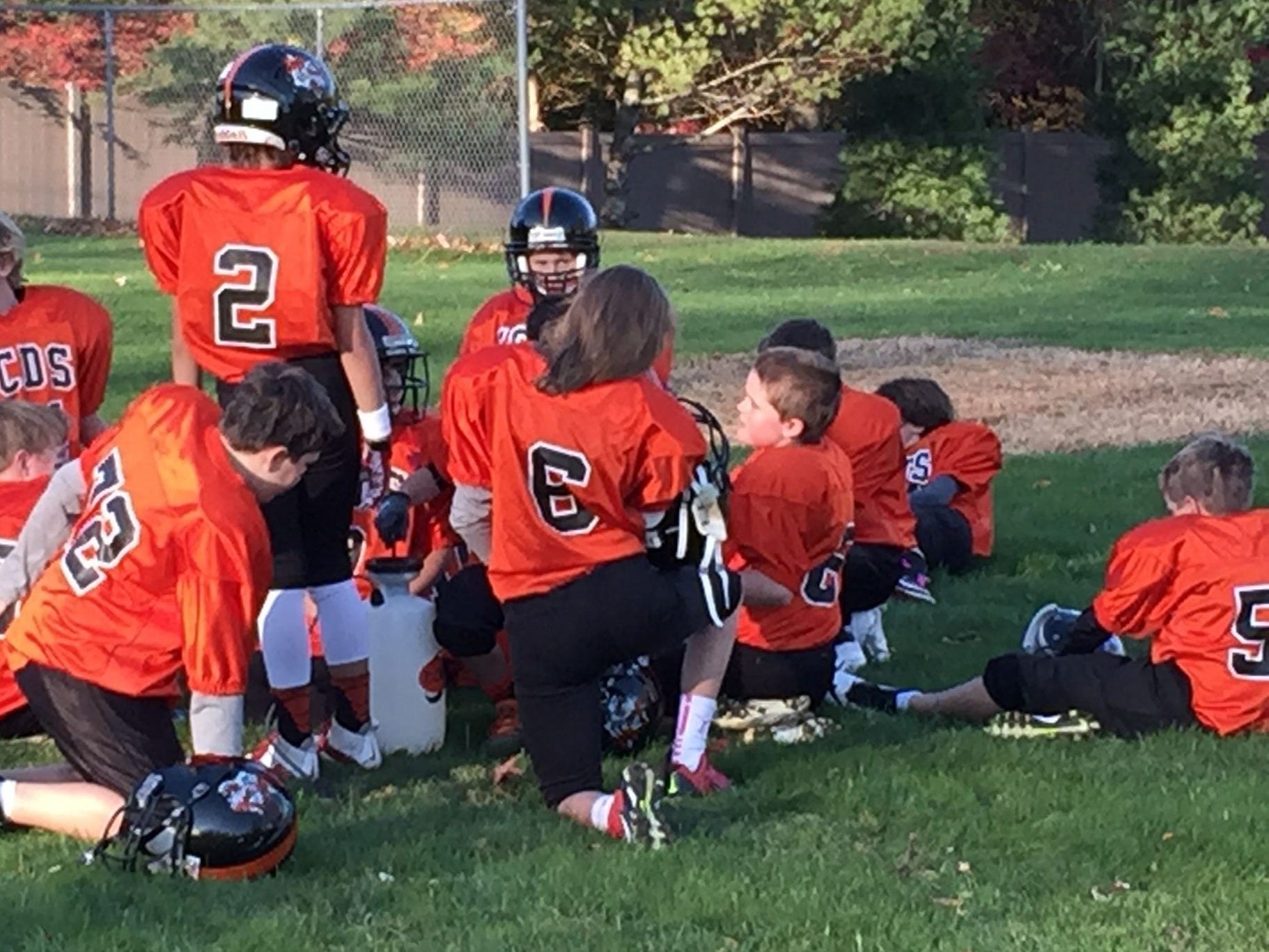
When I hear about the stories of these kids, I think of myself at age 12, 13, 14, growing up in suburban Connecticut without any language for gender or transness. I just called myself a “tomboy”. Up until the 6th grade I went to a small charter school where I was free to exist outside binaries, getting grass stains on my knees from schoolyard football before bopping over to the auditorium to practice my role of Maria in the school’s production of The Sound of Music. I was happy. Then I had to switch schools. I was 11, uprooted from this tight-knit accepting community right when my body was starting to change in uncomfortable ways.
I don’t remember much of this time, but thankfully I’ve always kept a journal. As I read through them recently, it is clear that I was extremely distressed by the idea of growing up and the changes happening within and around me. Some quotes:
“The part that moved me most was a part where the writer says something along the lines of ‘ Do you really want to grow up? Or do you want to stay a child where you can crawl in your mother’s lap and everything will be better?’”
“My feelings feel like a fire raging inside of me. I can’t put out the fire. It rages on and on. How do I put out this fire?”
“Why did life have to change so much? How? I just don’t understand!”
“I think I have a problem. I get stressed out so easily. I mean, I have my reasons but I feel so mad and sad and anxious and I hate it.”
This anguish wasn’t just about growing up. Somehow I convinced the school admin to let me play tackle football in 6th grade. I loved football, and it only felt natural to play the sport I’m passionate about since that’s what everyone else was doing. However, in entering this new school at the beginning of puberty and playing football, gender roles not only became abundantly clear to me for the first time, but they also affected how people saw me. I was extremely troubled by this. Some more quotes:
“I don’t get why girls at this school are so grossed out by guys?! I mean they don’t have fricking cooties! They are human too!”
“My team refuses to even be in the same line as me! I just don’t get it! Do I have some sort of disease just because I am a fricking girl? Now I sit in the study center. The room is separated into boys and girls. I HATE it! I wanna be part of the team, not just be ‘the girl’.”
“A boy and a girl are not that much different you know.”
These quotes from my own journals are just a snapshot of what it can feel like to exist as a trans kid. I’m a young 23 years old and even I didn’t grow up with the words for my gender, yet this deep distress and mental anguish was ever-present. Even without language, I knew I didn’t want the change that was occurring within my body and I went to extraordinary lengths to stop it. I am certain that a knowledgeable mental health worker would have identified my gender dysphoria. Instead, I spent my adolescence in and out of medical and mental institutions for mental health and self harm. I never heard about the concept of gender dysphoria until almost a decade later, finally away at college and starting to understand my own gender identity.
Why TGNC Youth Are at Higher Risk
I feel that it’s vital to make clear that trans youth are not at increased risk for depression, anxiety, body image issues, suicidality and more because they are trans. These risks are due to living in a society where occupying these identities leads to increased stress, discrimination, stigma, and prejudice [38]. In studies that look at the experience of TGNC youth or other minority identities, they often point to the minority stress model, created by the late social epidemiologist Virginia Brooks to expose how cultural, social, and economic stressors can worsen mental and physical health among social and sexual minorities [39]. In this context, it’s even more helpful to think about “intraminority stress”, the experience of those who occupy intersecting racial, social, economic, and sexual identities and how a distinct combination of identities influence how someone associates with systems of power, privilege and social status [40] .
Trans folks in particular experience distal stressors like stigma and discrimination as well as proximal stressors like internalized homophobia, transphobia, concealment of identity, or dysphoria — all of which leads to increased risk for the development of physical and mental health issues [38]. In understanding the experience of trans youth today and the different ways in which they interact with and access gender affirming care, it is essential to think about how identities like socioeconomic status, TGNC identity, race, age, and ability will intersect in distinct ways to exacerbate barriers and increase mental and physical risk factors.
Gender-Affirming Care: What It Is & How It Works
The Basics
Not just trans people use and need to access gender affirming care, it is also used by cisgender and intersex people. It also isn’t solely medical; as defined by the World Health Organization, gender affirming care is “any single or combination of a number of social, psychological, behavioral or medical interventions designed to support and affirm an individual’s gender identity” [41]. Further, because individuals have distinct gender identities and ways of expressing them, affirming one’s gender identity can take various forms [42]. For example, a breast cancer survivor may seek breast reconstruction after a mastectomy to better align with their gender expression (gender affirming care), while another person may seek a breast reduction, not because it affirms their gender, but because their breast tissue is causing them back pain (not gender affirming care). An intersex person may seek therapy to better understand and affirm their intersex identity (gender affirming care), while a trans person might seek mental health support not to understand or affirm their gender, but for support with anxiety (not gender affirming care). The key here is that gender affirming care, as the name implies, aids in affirming one’s gender identity.
Some examples of Gender affirming care for trans folks include: going by preferred pronouns; therapy and mental health support; products like binders, packers, and tucking panties; voice training; laser hair removal; makeup and other cosmetic products; gender affirming medical procedures; the ability to participate in sports or extracurriculars; puberty blockers; and hormone replacement therapy.
For trans youth with gender dysphoria, gender affirming care can decrease anxiety, depression, suicidal behavior, psychological distress, and increase quality of life [43].
Who Gets Care & Who Doesn’t
When I cite the benefits of gender affirming care to someone who has bought into the rhetoric of the anti-gender movement, they are primed to think I am recommending gender affirming care to everyone, just as they’ve been told doctors are doing. This harkens back to the phantasm of gender as an all-powerful, colonizing force — a narrative that could not be farther from reality. The harsh truth is that most trans people, no matter their age, do not have access to gender affirming care and they never have.
This lack of access is not only material, but can again be understood through the model of intraminority stress and the many systems of power at play within our society. For example, the majority of folks who are able to access gender affirming care are upper-middle-class, white, well-educated families with the time and money to seek out and access such care. This is tied to the white colonial gender norms of a heteropatriarchal society, where white trans people are seen as having a problem in their gender development that must be corrected [7].
On the other hand, low-come or working class trans individuals, people of color, and people from rural areas with fewer resources face compounding barriers in accessing this same care [15] Black trans kids in particular are much more likely to be shut out of receiving gender affirming medical care, and instead are more likely to be institutionalized or diagnosed as delusional or another condition that ignores their understanding of themselves [7].
Additionally, most states faced severe shortages of pediatric subspecialists even before state-wide bans on care were enacted [15]. Not to mention the fact that even receiving standard medical care comes with particular barriers for TGNC folks due to limited training and awareness of trans patients and their healthcare needs. In a study on trans folks’ experiences of seeking out healthcare, patients often reported having to take on an educator role during encounters, not feeling like the doctor is listening to them, and when a doctor does listen, framing their experiences in a medicalized, pathologizing manner [44] Not only are the proposed bans and bans already in place targeting a form of healthcare that almost no trans kids even have access to, they are creating even more barriers to healthcare at-large for a community that already faces so many.
Gender Affirming Care in Practice
As I mentioned above, gender affirming care isn’t just medical. Depending on circumstances, some kids may not be able to access gender affirming mental or physical care, but they might be able to access social forms of care. However, legislation targets both medical care and other aspects of care like bathroom usage, identity disclosure, and participating in sports. In the medical context, even when gender affirming care is accessible, it takes significant time, money, and resources to seek out and receive.
Also contrasting what the anti-gender movement wants many to believe, trans youth can’t just snap their fingers and access gender affirming medical care, they must have parental support and work with various specialized providers and care teams to get started [12]. Further, much of gender affirming medical care doesn’t involve hormones or procedures, rather, it looks like social workers, psychiatrists, and other providers listening, talking, and setting up support for a kid within school, their family, and community. They also discuss the child’s gender identity, how gender is something we “do” in social practice, and how it can take many expressions and forms.
For TGNC youth, transition is entirely social prior to puberty. It often looks like changing one’s name, hair, pronouns, or clothing. During and after puberty, the medical team works with the kid, their family, and mental health providers to decide whether medical treatment is recommended. This decision is almost always contingent on a dysphoria diagnosis. Afterwards, treatment usually takes the form of puberty blockers until age 16, and possible HRT afterwards. At all stages, the child, their caregivers, and medical professionals make decisions together. No permanent medical interventions occur until they are old enough to give truly informed consent [12].
Why Access Can Be Lifesaving
I hope that by this point I’ve established why trans kids are at higher risk for mental and physical health problems. The key question now, is if gender affirming care can help ameliorate these risks and benefit the wellbeing of these kids. The answer: a resounding, evidence-supported yes. Here I’ll get into some studies and statistics on gender-affirming healthcare to help illustrate this.
In one study, TGNC kids able to receiving gender affirming care saw a 60% reduction in moderate to severe depression and a 73% drop in suicidal thoughts and self-harm compared to those unable to access treatment [45]. In another study published in the New England Journal of Medicine, TGNC youth able to access gender affirming medical care reported higher levels of life satisfaction and positive affect and lower levels of gender dysphoria, depression, and anxiety [46]. One longitudinal study of trans adolescents before and after they were able to receive gender affirming care showed steady improvement in psychological functioning throughout treatment and wellbeing after treatment being “comparable to [that of] same-age peers.”[47]
Some studies also compare trans adults who were able to access gender affirming care as adolescents to trans adults who weren’t. One found that adults who accessed care in childhood had significantly lower incidence of suicidal ideation than those who had wanted to receive care but weren’t able to access it [48]. Another study by Stanford University School of Medicine found that trans adults who were able to access HRT as teenagers had higher mental health outcomes than those who were only able to access it as adults [49].
As a chronically ill and disabled person, many of these statistics and the language of medical journals can cause me to bristle. They can feel like a slippery slope into asserting only one way as healthy, good, and “normal”. In this context though, medical journals and the application of the scientific method are often necessary for any social, legal, and system-wide change. Further, many of the statistics relating to gender affirming care for trans youth aim to quantify depression, suicidal ideation, and self harm, experiences that are often a direct result of barriers and stigmatization, not the kids themselves.
What It Means to Deny Care
Denying gender affirming care can have catastrophic consequences in the lives of TGNC youth, their families, and loved ones. In the medical and social context, denying care can also be thought of as medical neglect and emotional abuse.
Medical Neglect is the failure to provide necessary medical care to a child, which has the potential to lead to physical or psychological harm. Research clearly shows how TGNC youth have drastically better mental health outcomes when they are supported in their gender identities and some studies even suggest that access to care entirely mitigates the increased risk of depression and suicidality. Evidence also shows that denying access to gender affirming care actively harms TGNC kids and can be potentially life threatening [28]. Therefore, legislative restrictions and bans on care are essentially mandating caregivers and medical providers to harm TGNC youth, a situation that exeedingly meets the criteria for medical neglect.
Emotional abuse, on the other hand, involves actions – either a repeated pattern or extreme single incident – that thwart a child’s basic psychological needs. The degree to which these needs are met impact a kid’s identity, capacities, and behaviors into adulthood [50]. As studies show, a kid’s psychological distress is perpetuated when they do not have access to gender affirming care. Further, the current legislative bans and associated negative media attention also undermine the self-worth and psychological well-being of TGNC youth [51]. These direct negative health consequences are consistent with the definition of state-sanctioned emotional abuse [28].
What Care Changed for Me
When outlining the experiences of TGNC youth, I mentioned my personal experience with gender dysphoria although I did not have the words for it at the time. When I finally accessed that language, everything started to simultaneously click into place and slowly unravel. I was finally able to understand and express my gender, access the care I had needed for so long, and exit a dissociative state I had been in for the majority of my adolescence. It was a joyous time, but it was also filled with grief.
Not being able to describe my nonbinary identity, access the care I needed, or exist and be seen outside of the binary caused a lot of suffering. The way my body was changing, the way others were starting to see me as I began puberty was completely out of my control, and the only way I found to control it was through restriction and self-harm. This manifested in an eating disorder that caused me to spend most of my adolescence dissociated and in and out of mental and physical health institutions. I believe that receiving gender affirming care in any form, could have prevented much of the trauma I carry with me today.

My experience of mental illness and self harm at a young age occurred without the knowledge of gender diversity or care available. I can only imagine the pain I would have endured if I had known about gender affirming care and still not been able to access it.
Next week, I will be delving into the overlap between eating disorders and TGNC youth, the nuance in necessary care, and how bans on gender affirming care will lead to an increase in eating disorders for a population with already disproportionately high rates. If you’re interested, please subscribe:)
Gender Affirming Medical Procedures
It is a unique time to be writing this given that last Wednesday, February 4th, The American Medical Association and the American Society of Plastic Surgeons (ASPS) made partial changes to their recommendations on gender affirming care. Specifically, they are now recommending gender-affirming surgeries be deferred to adulthood [52]. ASPS claimed they made this decision due to insufficient research into the benefits of gender-affirming surgeries for TGNC youth.
When I hear that claim, I think that’s probably because the care is extremely difficult to access and that research, particularly longitudinal research into benefits, hasn’t been funded. An analysis of federal data by The New York Times found that of the 669 grants that the National Institutions of Health have cancelled in whole or in part since early May, totaling more than 800 million dollars, at least 323 were related to LGBTQ+ health [53].
To be clear, both medical associations still support gender affirming medical care for trans youth experiencing dysphoria, they are specifically walking back their recommendations on surgery. Although this isn’t all bad news, it still adds to the growing stigma around gender affirming care for trans youth, causes harm for those who need access, and could be used as fodder for the claims of the anti-gender movement at-large.
In the case of gender-affirming medical care for TGNC youth, surgeries are almost never performed, and when they are, the patients are over 16 [12]. For gender-affirming procedures at-large, the regret rate is less than 1%, far less than most medical procedures [54]. Interestingly, research from Harvard suggests that cisgender youth are actually far more likely to undergo gender affirming surgery than their trans peers [55].
Other medical organizations who support gender affirming medical care for TGNC youth like the American Academy of Pediatrics told The New York Times that their recommendations remain consistent. The AAP’s president told the times that the “The AAP continues to hold to the principle that patients, their families, and their physicians – not politicians – should be the ones to make decisions together about what care is best for them” [52].
Protect Trans Kids
In the discourse surrounding trans folks and gender affirming care at large, I feel like people sometimes forget that trans adults were once trans kids too, regardless of whether we had the language to describe it or access to gender affirming care. I know that when I hear about proposed and in-place legislative bans, I want to protect those kids. I don’t want them to go through what I did: the mental hardship, the fear I felt in institutions and healthcare situations, the near-decade I spent pretending to be someone else. I viscerally remember the feeling of being a kid and having my voice and agency completely stripped away, feeling that the whole trajectory of my life is out of my hands. I felt that in the context of being entangled in institutional/medical spiderwebs where I was not seen as a person with wants and needs, but a body. Unlike my experience though, trans kids today have to navigate the lack of control that comes with adolescence and the knowledge that far-off politicians, lawyers, journalists and entire communities are arguing over the very truth at the core of their existence. It can’t be easy.
When trans adults speak out about this injustice, the need for access to gender affirming care, the anti-gender movement often spins this to say, “See? These predators want to force your kids to transition! They are spreading this dangerous gender ideology!” This claim couldn’t be farther from the truth. Access to the social, medical, and mental care one needs to survive is a human right.
Today, the average person will hear about gender affirming care in one way or another. It’s often from journalists, opinion columnists, politicians, and others. It’s almost never the voices of actual trans people: trans youth, trans adults, trans elders. Almost never the parents, caregivers, and communities trying to support their trans loved ones.
This helps the anti-gender movement wield the phantasm of gender to depict trans people as an unseen contagion, a predatory force, a brainwashed zombie spreading “gender ideology”. They will do anything to prevent seeing trans people for what we are: deeply and unquestionably human.
Imagine being a caregiver sitting in a doctor’s office, asking how to best support your child. Your child who is suffering, who is depressed, who is suicidal, who doesn’t feel like they belong in the world, let alone their own body. Imagine being that kid who doesn’t feel like they belong among their peers, with their body, who wants to simply exist how they know themselves to be. Imagine being a clinician, who took an oath to “do no harm”, to practice medicine guided by evidence, ethics, and best practices. Imagine having to tell the caregiver sitting in front of you that you cannot offer the care their kid needs in order to ease their depression and stop their self-harm. Imagine being the caregiver and hearing that. Imagine being the kid and feeling like your entire life is out of your control.
This is the reality of doctors, TGNC youth, and their loved ones.
As I hope I’ve described, gender affirming medical care isn’t the only kind of gender affirming care, but it needs to be accessible. All gender affirming care needs to be accessible instead of threatened by an agenda that seeks to restrict all aspects of trans people’s lives: the bathrooms we use, their right to disclose our identities, the mere discussion of our identity, our participation in sports, in the military, and more. Further legislation based on unfounded evidence and hatred will only create more barriers, stigma, and discrimination for TGNC minors, adults, and their loved ones, exacerbating the already catastrophic mental, social, and physical outcomes for a population at disproportionate risk.
I hope that this field guide helped you learn more about the state of gender affirming care in the US, the attacks against it, and how they are connected to a larger movement to uphold the colonial epistemologies that sustain traditional gender categories. I hope you learned about the lived experience of TGNC youth and the increased risks they face, how gender affirming care can look like in practice, and how it can help increase wellbeing and reduce depression, anxiety, and suicidality in TGNC kids.
I also hope you’ll take what you’ve learned and do your own further reading, talk with your community about this, advocate for the trans kids who are already facing so much vitriol, barriers, and hardship, check out the actions and sources below, and connect with and support the trans people in your life—I promise they exist, and they’ll appreciate it.
Actions, Support, and Sources
Things You Can Do:
If you can, call or email your elected officials. I know it can feel annoying but it really does help. (click here to contact your representatives about the house bill)
Submit a public comment about the proposed HHS rules (click here for link to submit comment)
If you or someone you know needs help accessing gender affirming care for TGNC youth can contact the Trans Youth Emergency Project and the Campaign for Southern Equality (click here to access)
In the comments, please drop any books or articles that have helped you better understand any of the topics mentioned in this field guide.
Share any related resources, further context, or mutual aid supporting TGNC youth and adults.
I recommend skimming through the sources below and bookmarking any that you would like to read more about. I marked the ones I found particularly helpful with a star (*). Below are other applicable resources:
Transgender Law Center’s Organizing for Transgender Health Care: A Guide for Community Clinic Organizing and Advocacy (click here to access)
Massachusetts Transgender Political Coalition Trans Suicide Prevention Resources (click here to access)
Good Books to Start with (by trans authors):
A Short History of Trans Misogyny by Jules Gill-Peterson
So Many Stars: An Oral History of Trans, Nonbinary, Genderqueer, and Two-Spirit People of Color by Caro De Robertis
Who’s Afraid of Gender by Judith Butler
Marsha: The Joy and Defiance of Marsha P Johnson Tourmaline
Sources:
Centers for Medicare & Medicaid Services, “Medicare and Medicaid Programs; Hospital Condition of Participation: Prohibiting Sex-Rejecting Procedures for Children,” Federal Register, December 19, 2025, https://www.federalregister.gov/documents/2025/12/19/2025-23465/medicare-and-medicaid-programs-hospital-condition-of-participation-prohibiting-sex-rejecting.
Erin Reed, “Nationwide Trans Youth Care Ban Incoming As Trump Admin Announces ‘Nuclear Option’ Federal Rule,” Erin in the Morning (Substack), December 18, 2025,
Robert F. Kennedy Jr., “Declaration: Pediatric Sex-Rejecting Procedures” (PDF), U.S. Department of Health and Human Services, December 18, 2025, https://www.hhs.gov/sites/default/files/declaration-pediatric-sex-rejecting-procedures.pdf.
S. Baum, “HHS Sec. Kennedy Attempts To Stop Trans Youth Care In Hospitals Nationwide—Before New Federal Rules Take Effect,” Erin in the Morning (Substack), December 23, 2025,
Meredithe McNamara et al., Response to the Cass Review (Yale Law School Integrity Project, July 1, 2024), https://law.yale.edu/sites/default/files/documents/integrity-project_cass-response.pdf.
Ben Greene, “What’s Going On with Gender Affirming Care?,” Good Queer News (Substack), October 31, 2025,
Jules Gill-Peterson, “Trans children have a history,” The Guardian, April 1, 2021, https://www.theguardian.com/us-news/2021/apr/01/trans-children-history-jules-gill-peterson-interview.
U.S. Congress, House, H.R. 3492, Protect Children’s Innocence Act, 119th Cong., Congress.gov, https://www.congress.gov/bill/119th-congress/house-bill/3492/text.
Erin Reed, “MTG’s Felony National Youth Trans Ban Passes House; 3 Dems Vote For It, 4 GOP Vote Against It,” Erin in the Morning (Substack), December 17, 2025,
“Skrmetti: Beyond Scrutiny,” Harvard Law Review (Case Comment, November 2025), https://harvardlawreview.org/print/vol-139/skrmetti-beyond-scrutiny/.
*Williams Institute, The Impact of 2025 Anti-Transgender Legislation on Youth, January 2026, https://williamsinstitute.law.ucla.edu/publications/anti-trans-legislation-youth/.
*Human Rights Campaign, “Get the Facts on Gender-Affirming Care,” https://www.hrc.org/resources/get-the-facts-on-gender-affirming-care.
Rob O’Dell and Nick Penzenstadler, “You elected them to write new laws. They’re letting corporations do it instead,” USA Today, April 3, 2019 (updated June 19, 2019), https://www.usatoday.com/in-depth/news/investigations/2019/04/03/abortion-gun-laws-stand-your-ground-model-bills-conservatives-liberal-corporate-influence-lobbyists/3162173002/.
*Madison Pauly, “Inside the Secret Working Group That Helped Push Anti-Trans Laws Across the Country,” Mother Jones, March 8, 2023, https://www.motherjones.com/politics/2023/03/anti-trans-transgender-health-care-ban-legislation-bill-minors-children-lgbtq/.
*Human Rights Watch, “They’re Ruining People’s Lives”: Bans on Gender-Affirming Care for Transgender Youth in the US, June 3, 2025, https://www.hrw.org/report/2025/06/03/theyre-ruining-peoples-lives/bans-on-gender-affirming-care-for-transgender-youth.
Judith Butler, Who’s Afraid of Gender? (New York: Farrar, Straus and Giroux, 2024), 16.
Verónica Gago, “Fire Alarm!,” in “Judith Butler’s Who’s Afraid of Gender?,” Signs: Journal of Women in Culture and Society (Short Takes), https://signsjournal.org/judith-butlers-whos-afraid-of-gender/.
*“Outlawing Trans Youth: State Legislatures and the Battle over Gender-Affirming Healthcare for Minors,” Harvard Law Review 134, no. 6 (April 2021): 2163–2185, https://harvardlawreview.org/print/vol-134/outlawing-trans-youth-state-legislatures-and-the-battle-over-gender-affirming-healthcare-for-minors/.
Mel Leonor Barclay, “Health care for trans youth is becoming a core issue for Republican presidential candidates,” The 19th, June 14, 2023, https://19thnews.org/2023/06/trans-youth-issue-republican-presidential-candidates/.
Julia Serano, “Anti-trans ‘Grooming’ and ‘Social Contagion’ Claims Explained,” Medium, https://juliaserano.medium.com/anti-trans-grooming-and-social-contagion-claims-explained-a511a93b042f.
Clare Hemmings, “Fantasy and Fear: Reading Who’s Afraid of Gender? in Our Perilous Times,” in “Judith Butler’s Who’s Afraid of Gender?,” Signs: Journal of Women in Culture and Society (Short Takes), https://signsjournal.org/judith-butlers-whos-afraid-of-gender/.
United States v. Skrmetti, No. 23–477 (U.S. June 18, 2025), https://www.supremecourt.gov/opinions/24pdf/23-477_2cp3.pdf.
Clyde McGrady, “Nick Fuentes’s Rise Puts MAGA Movement in a ‘Time of Choosing,’” New York Times, November 6, 2025, https://www.nytimes.com/2025/11/06/us/politics/nick-fuentes-trump.html
Rafia Zakaria, “Gender and Whiteness,” in “Judith Butler’s Who’s Afraid of Gender?,” Signs: Journal of Women in Culture and Society (Short Takes), https://signsjournal.org/judith-butlers-whos-afraid-of-gender/.
“Who’s Afraid of Gender by Judith Butler review—The gender theorist goes mainstream,” The Guardian, March 13, 2024, https://www.theguardian.com/books/2024/mar/13/whos-afraid-of-gender-by-judith-butler-review-the-gender-theorist-goes-mainstream.
Judith Butler, “A Response,” in “Judith Butler’s Who’s Afraid of Gender?,” Signs: Journal of Women in Culture and Society (Short Takes), https://signsjournal.org/judith-butlers-whos-afraid-of-gender/.
Jason Rafferty, “Ensuring Comprehensive Care and Support for Transgender and Gender-Diverse Children and Adolescents,” Pediatrics 142, no. 4 (2018): e20182162, https://doi.org/10.1542/peds.2018-2162.
*Emily Georges, Emily C. B. Brown, and Rachel Silliman Cohen, “Prohibition of Gender-Affirming Care as a Form of Child Maltreatment: Reframing the Discussion,” Pediatrics 153, no. 1 (2024): e2023064292, https://publications.aap.org/pediatrics/article/153/1/e2023064292/196236/Prohibition-of-Gender-Affirming-Care-as-a-Form-of.
“A Flawed Agenda for Trans Youth,” The Lancet Child & Adolescent Health (Editorial), June 2021, https://www.thelancet.com/journals/lanchi/article/PIIS2352-4642(21)00139-5/fulltext.
Jenifer K. McGuire et al., “Body Image in Transgender Young People: Findings from a Qualitative, Community-Based Study,” Body Image 18 (2016): 96–103.
*Abbie E. Goldberg et al., “Health Care Experiences of Transgender Binary and Nonbinary University Students,” The Counseling Psychologist 47 (2019): 59–86.
*Arjee Restar et al., “Antitrans Policy Environment and Depression and Anxiety Symptoms in Transgender and Nonbinary Adults,” JAMA Network Open 7, no. 8 (2024): e2431306, https://doi.org/10.1001/jamanetworkopen.2024.31306.
Williams Institute, “More than 80% of transgender employees in the US have experienced discrimination or harassment at work,” November 19, 2024, https://williamsinstitute.law.ucla.edu/press/trans-workplace-press-release/.
*Ryan Goulding et al., “Transgender and gender diverse youths’ experiences of healthcare: A systematic review of qualitative studies,” Journal of Child Health Care 29, no. 2 (2025): 523–545, https://doi.org/10.1177/13674935231222054.
Sam Levin, “‘It helps me be myself’: trans kids on the healthcare Republicans want to deny them,” The Guardian, March 24, 2021, https://www.theguardian.com/us-news/2021/mar/24/trans-children-healthcare-ban-gender-affirmin.
Alec Berg, “Gender-affirming care saved her life—then she lost access,” LGBTQ Colorado, January 28, 2026, https://lgbtqcolorado.org/gender-affirming-care-saved-her-life-then-she-lost-access/.
Sam Levin, “How trans children became ‘a political football’ for the Republican party,” The Guardian, March 23, 2021, https://www.theguardian.com/us-news/2021/mar/23/anti-trans-bills-us-transgender-youth-sports.
Ilan H. Meyer, “Resilience in the study of minority stress and health of sexual and gender minorities,” Psychology of Sexual Orientation and Gender Diversity 2, no. 3 (2015): 209–213, https://doi.org/10.1037/sgd0000132.
Ashleigh Rich, “We can’t talk about LGBT health without remembering Virginia Brooks,” The Conversation, June 30, 2020, https://theconversation.com/we-cant-talk-about-lgbt-health-without-remembering-virginia-brooks-132850.
John E. Pachankis et al., “Sex, status, competition, and exclusion: Intraminority stress from within the gay community and gay and bisexual men’s mental health,” Journal of Personality and Social Psychology 119, no. 3 (2020): 713–740, https://doi.org/10.1037/pspp0000282.
World Health Organization, “Gender incongruence and transgender health in ICD-11 (FAQ),” https://www.who.int/standards/classifications/frequently-asked-questions/gender-incongruence-and-transgender-health-in-the-icd.
Vinchenzo Vassalotti, “Gender-Affirming Healthcare,” The Chicago Council on Science and Technology, https://www.c2st.org/gender-affirming-healthcare/.
Rosalia Costa et al., “Psychological Support, Puberty Suppression, and Psychosocial Functioning in Adolescents with Gender Dysphoria,” Journal of Sexual Medicine 12 (2015): 2206–2212, https://doi.org/10.1111/jsm.13034.
*Kedryn Berrian et al., “Barriers to Quality Healthcare among Transgender and Gender Nonconforming Adults,” Health Services Research (published online July 10, 2024), https://doi.org/10.1111/1475-6773.14362.
Diana M. Tordoff et al., “Mental Health Outcomes in Transgender and Nonbinary Youths Receiving Gender-Affirming Care,” JAMA Network Open 5, no. 2 (2022): e220978, https://doi.org/10.1001/jamanetworkopen.2022.0978.
Diane Chen et al., “Psychosocial Functioning in Transgender Youth after 2 Years of Hormones,” New England Journal of Medicine 388, no. 3 (2023): 240–250, https://doi.org/10.1056/NEJMoa2206297.
Annelou L. C. de Vries et al., “Young Adult Psychological Outcome After Puberty Suppression and Gender Reassignment,” Pediatrics 134, no. 4 (2014): 696–704, https://doi.org/10.1542/peds.2013-2958.
Jack L. Turban et al., “Pubertal Suppression for Transgender Youth and Risk of Suicidal Ideation,” Pediatrics 145, no. 2 (2020): e20191725, https://doi.org/10.1542/peds.2019-1725.
Stanford Medicine News Center, “Mental health benefits associated with hormone therapy in transgender people,” January 12, 2022, https://med.stanford.edu/news/all-news/2022/01/mental-health-hormone-treatment-transgender-people.html.
J. R. Pharr et al., “Serial mediation analysis of the association of familiarity with transgender sports bans and suicidality among sexual and gender minority adults in the United States,” International Journal of Environmental Research and Public Health 19, no. 17 (2022): 10641.
Eli Coleman et al., “Standards of Care for the Health of Transgender and Gender Diverse People, Version 8,” International Journal of Transgender Health 23, suppl. 1 (2022): S1–S259.
Andrew Jacobs, “Doctors’ Group Endorses Restrictions on Gender-Related Surgery for Minors,” New York Times, February 4, 2026, https://www.nytimes.com/2026/02/04/health/gender-surgery-minors-ama.html.
Benjamin Mueller, “Trump Administration Slashes Research into LGBTQ Health,” New York Times, May 4, 2025, https://www.nytimes.com/2025/05/04/health/trump-administration-slashes-research-into-lgbtq-health.html.
Sarah M. Thornton, Armin Edalatpour, and Katherine M. Gast, “A Systematic Review of Patient Regret after Surgery—A Common Phenomenon in Many Specialties but Rare within Gender-Affirmation Surgery,” American Journal of Surgery 234 (2024): 68–73.
Maya Brownstein, “Gender-affirming surgeries rarely performed on transgender youth,” Harvard T.H. Chan School of Public Health, July 8, 2024, https://hsph.harvard.edu/news/gender-affirming-surgeries-rarely-performed-on-transgender-youth/.
*GLAAD, “Medical Association Statements in Support of Health Care for Transgender People and Youth,” June 26, 2024, https://glaad.org/medical-association-statements-supporting-trans-youth-healthcare-and-against-discriminatory/.
Cal Horton and Ruth Pearce, “The U.K.’s Cass Review Badly Fails Trans Children,” Scientific American, August 7, 2024,https://www.scientificamerican.com/article/the-u-k-s-cass-review-badly-fails-trans-children/.

